
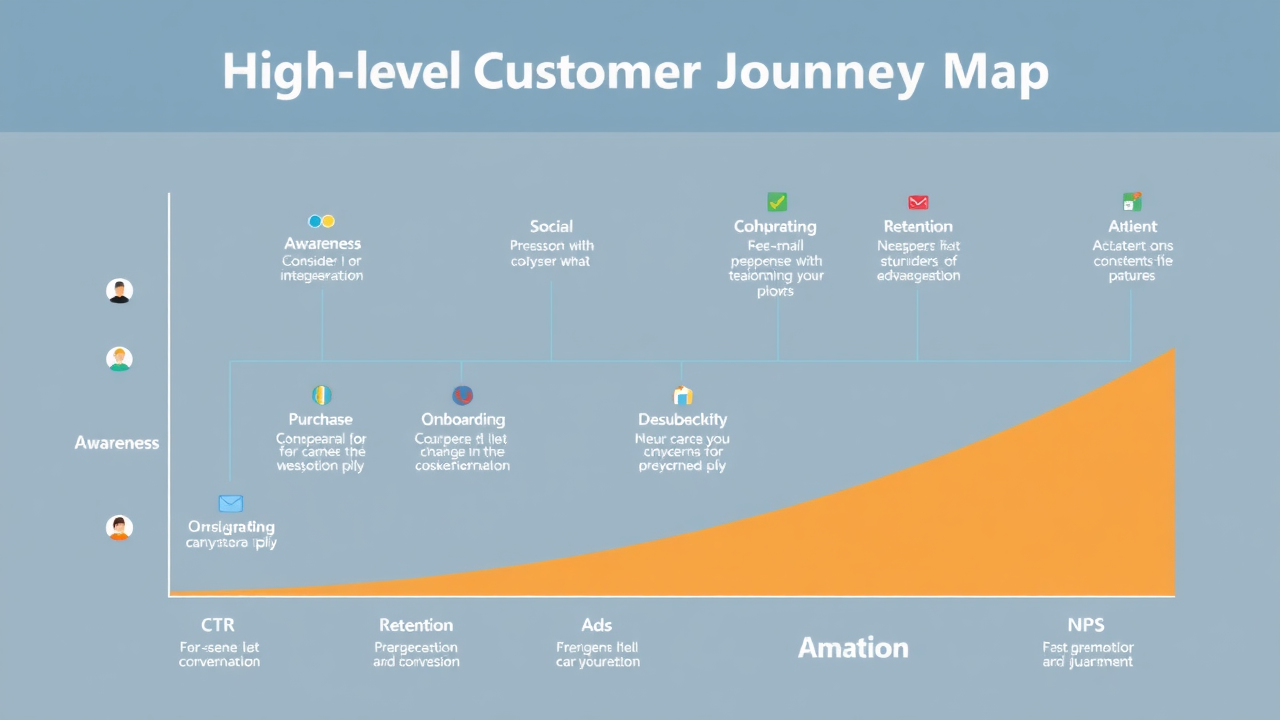
The customer journey is key in a highly competitive business environment where companies that strive to provide customers with outstanding customer experience need to know it. A customer journey map is an effective tool which helps to visualize the process of interaction with a company by a customer from the first awareness to purchase and even after. Through the creation of an entire customer journey map, companies will be able to define the pain points, increase customer satisfaction and optimize their marketing plans to target the right customers better. This blog will take a closer look at the main elements of a customer journey map, how to create one, and what it can teach to get the targeting more efficiently.
What is a Customer Journey Map?
Customer journey map is a diagram that describes interactions and experiences of a customer with a brand at different touchpoints. It reveals the processes that a customer passes through and they include:
- Awareness: A problem or need is created for the customer.
- Consideration: The client does his research on possible solutions.
- Choice: The customer weighs choices and buys.
- Retention: The customer interacts with the brand after purchasing.
- Advocacy: The customer will be an advocate of the brand.
These stages are important in understanding the businesses so that they can customize their marketing operations.
The Importance of Customer Journey Mapping
Mapping the customer journey enables businesses to:
- Determine Customer Pain Points: With a visual representation of the customer experience, a business will be able to know what customers experience hardships or frustrations in the process. This understanding is important in overcoming problems and enhancing satisfaction.
- Improve Customer Experience: A properly designed customer journey map aids businesses to create superior customer experiences by matching their products with customer demands and expectations.
- Streamline Marketing Processes: With knowledge of customer journey, there is the ability by the businesses to develop specific marketing campaigns that appeal to the customers at every point of their journey.
- Create Customer Loyalty: Customer satisfaction may result in higher levels of loyalty since customers will be more willing to come back as well as recommend the brand to others.
Steps to Create a Comprehensive Customer Journey Map
Creating a customer journey map involves several key steps:
1. Define Your Goals
It is important to first define what is the purpose of your customer journey map before getting into the mapping process. Do you want to work on customer satisfaction, sales or brand loyalty? Mapping will be steered by the definition of clear goals.
2. Understand Your Audience
It is very important in developing a customer persona in order to know your target audience. Collect information about your customers including demographics, behavior, and preferences using surveys, interviews and analytics. This knowledge will assist in making a better trip map.
3. Identify Touchpoints
Identify each and every point of contact that the customers touch the brand online and offline. This includes:
- Website visits
- Social media interactions
- Customer service calls
- In-store visits
- Email communications
These touchpoints are essential in order to conceptualize the customer journey.
4. Map the Customer Stages
Break down the customer journey into specific stages (awareness, consideration, decision, retention, advocacy) and map out the actions, thoughts and emotions that customers experience at each stage. This could be done in a simple table or more graphical one with flowcharts.
5. Gather Insights and Feedback
Interact with customers to obtain information on their experiences at each point of contact. This will be possible by use of surveys, interviews and focus groups. Feedback of customers This is priceless in determining what is causing pain and what can be improved.
6. Analyze and Refine
After you have made your customer journey map, use the information to identify trends, areas of pain and improvement areas. This analysis must be used to come up with strategies to ensure that the customer experience at every stage is enhanced.
7. Implement Changes
On the basis of your analysis, introduce adjustments in your process, marketing and customer relations. This may be the improvement of customer services, the simplification of the buying process or tailoring of the marketing messages.
8. Monitor and Update
Customer journey mapping is not a single process. Keep on checking on the customer feedback and performance metrics to improve your journey map and strategies as time goes by. This continuous process will keep your business in line with the needs and preferences of customers.
Key Insights for Better Targeting
A comprehensive customer journey map provides several insights that can enhance targeting efforts:
1. Personalization Opportunities
This is because knowing the customer behaviors and preferences would enable the business to develop individual experiences and marketing messages that appeal to a particular customer. Engagement and conversion rate can be greatly enhanced through personalization.
2. Timing and Context
The point of interaction between your customers and your brand enables businesses to identify the time and location of interaction and, therefore, provide contextually relevant communication. As an example, it is possible to predict that a customer is a late-night product researcher and use the hour when the customer is preparing to sleep as a pretext to send targeted marketing email or advertisements.
3. Customer Emotions
The process of mapping the customer emotions at every stage gives us an insight on the feelings the customers have on their customer experiences. This is possible by dealing with negative emotions and building up the positive ones which may result in better customer satisfaction and loyalty.
4. Cross-Channel Consistency
An in-depth customer journey map draws our attention to the need for consistency in all the customer touchpoints. The customer experience can be improved by ensuring that a channel message, branding, and customer service are all aligned.
Conclusion
The creation of the complete customer journey map can be regarded as a vital process that a business should undertake, in case it aims to enhance the customer experience and targeting strategies. Knowing the phases of the customer journey and the insights after mapping, the companies may recognize the pain points, increase the customer satisfaction, and develop the marketing strategies that can be more effective. The customer journey map is a valuable asset to succeed in the long run, especially in a world where the level of customer expectations is rising higher than ever.